





ECONOMIC BENEFITS
A building with BREEAM© certification offers significant economic benefits for users (cuts power use between 50% and 70%, uses up to 40% less water, and reduces maintenance and operating costs by 7% to 8%).
ENVIRONMENTAL BENEFITS
Source: McGraw-Hill Construction, SmartMarket Report 2008
Reduced power use has a direct impact on the environment, but there are many other measures promoted under this methodology to cut CO2 emissions during the lifespan of the building and are grouped into categories that include, among others, Transport (location of the plot, access to public transport, etc.), Waste (issues associated with storage before collection and treatment) and Pollution (use of refrigerants and insulation with low global warming potential, low-NOx heating systems, etc.).
SOCIAL BENEFITS
The ambiance inside the buildings we live in is an important part of our quality of life.
Measures like air quality, lighting, and noise levels, and outdoor views have a direct impact on making buildings more comfortable, productive, safer and healthier for users and, therefore, society.
CULTURAL BENEFITS
BREEAM© certification promotes a cultural shift on several levels, including the ability to transform the market by promoting the use of sustainable building materials, and raising awareness in the region of the importance of sustainability in new-builds, refurbishment and later management of buildings, as applies.
Building
FOUNDATIONS AND STRUCTURE
03
The structure will be built with reinforced concrete, in line with current regulations and the Spanish Technical Building Code (CTE).
The foundations will be executed in accordance with the results of the geotechnical study.
ROOFS
The flat roofs will be inverted, for better thermal insulation, with waterproofing and rigid panel insulation.
The finishings in the non-accessible areas will be with gravel and inaccessible areas, with non-slip, frost-resistant ceramic tile.
FAÇADES
The façade will use the double-skin system; sound-proof perforated brickwork covered in plaster and painted on the outside, lined with sheets of laminated plasterboard with thermal and acoustic mineral wool insulation on the inside, attached to the metal framework to ensure proper insulation of the home.
JOINERY AND GLASSWORK
The joinery on the windows will be lacquered aluminum, the colour chosen by the project management team, with a monoblock thermal break.
They will be swing or sliding windows, depending on the type.
The glass in all the windows will be double glazing with a dehydrated air cavity, like “Climalit”, to further improve the building’s thermal insulation and, therefore, comfort and wellbeing inside.
The windows will have lacquered aluminum roller shutters, the colour chosen by the project management team, with injection foam insulation for total darkness in sleeping areas.
On the ground floor, the doors and windows will have security bars.
Interior of the home. Finishes
INTERIOR WALLS AND INSULATION
The inside walls of the home will be laminated plasterboard on the metal framework with interior mineral-wool thermal and acoustic insulation.
In wet rooms, the laminated plasterboard will be waterproof.
The walls between homes, and between homes and common areas, will have sound-proof perforated brickwork, lined with sheets of laminated plasterboard with thermal and acoustic mineral wool insulation on the inside, attached to metal framework.
INTERIOR JOINERY
The front door to the home will be armored, with a three-point security lock and finished in natural or lacquered wood.
The interior doors will be finished in wood or lacquered, with a rubber seal for soundproofing. The doors to the living room and kitchen will have glass inserts.
The modular closets will be built-in with swing doors in the same finish as the other interior doors. The inside will have cladding, with a suitcase shelf and hanging rail.
The hardware and handles will be in matte chrome steel.
FLOORING
05
The flooring throughout the home will be ceramic tile installed with fireproof adhesive.
Except in wet rooms, there will be a skirting board to match the interior joinery. The bathrooms will have ceramic skirting on non-tiled walls to match the flooring.
CLADDING AND DROP CEILINGS
The bathrooms, both main and secondary, will be finished in ceramic tiles attached with waterproof cement-based adhesive around the bathtubs, showers, and sinks, and the other walls finished with plastic paint.
The foyer, halls, kitchen, and bathrooms will have a drop ceiling with a laminated plasterboard.
The ceilings and walls in the rest of the home will be painted in flat plastic paint, in light colors and/or white, to be chosen by the project management team.
KITCHENS
The kitchen will be finished with roomy laminated uppers and lowers.
The bench will be laminated Formica with a stainless-steel sink and low-flow mixer tap to reduce water waste.
The kitchen will be equipped with the following:
• Built-in pull-out extractor hood.
• Built-in electric oven and microwave.
• Glass-ceramic cooktop.
Installations
CLIMATE CONTROL AND HOT WATER
The homes will have climate control systems using heat pumps and ductwork run in the drop ceiling, with forced-air grates in the living room and bedrooms.
There will be an ambient thermostat in the living room.
For hot water, the homes will have an electric boiler.
The renewable energy system will be solar panels.
PLUMBING AND WASTEWATER
08
The pipes will be insulated cross-linked polyethylene, which is more resistant to any type of water, smoother and has better conductivity than metals like copper.
The waste-water pipes will be PVC and the downpipes will be soundproofed.
The toilets will be glazed porcelain in white. The bathrooms will have wall-mounted sinks.
Plus, the main bathroom will have a shower. The secondary bathroom will come with a bathtub.
The fixtures will be low-flow mixer taps.
The homes will have a master shut-off valve and separate ones in the kitchen and bathrooms.
The solariums, terraces and private outdoor spaces on the ground floor will have a tap.
They will have the pre-installation for automatic watering with a water point in private garden areas.
ELECTRICITY AND TELECOMMUNICATIONS
09
The telecommunications lines will be installed according to regulations on shared telecommunications infrastructures.
The homes will have Integrated Services Digital Network (channel assignment) for later installation of cable TV (if the residents choose) and analog and digital TV receiver, radio and phone hook-ups in the living room, kitchen, and bedrooms.
It will have high-voltage installations.
There will be more power outlets than required by law.
The attic terraces and ground-floor gardens have a single plug.
Installation of the intercom.
The carpark will be installed with charging points for electric vehicles, as per current legislation.
HOME AUTOMATION
All of the homes will have pre-installation for basic home automation.
Urbanization and Common areas
11
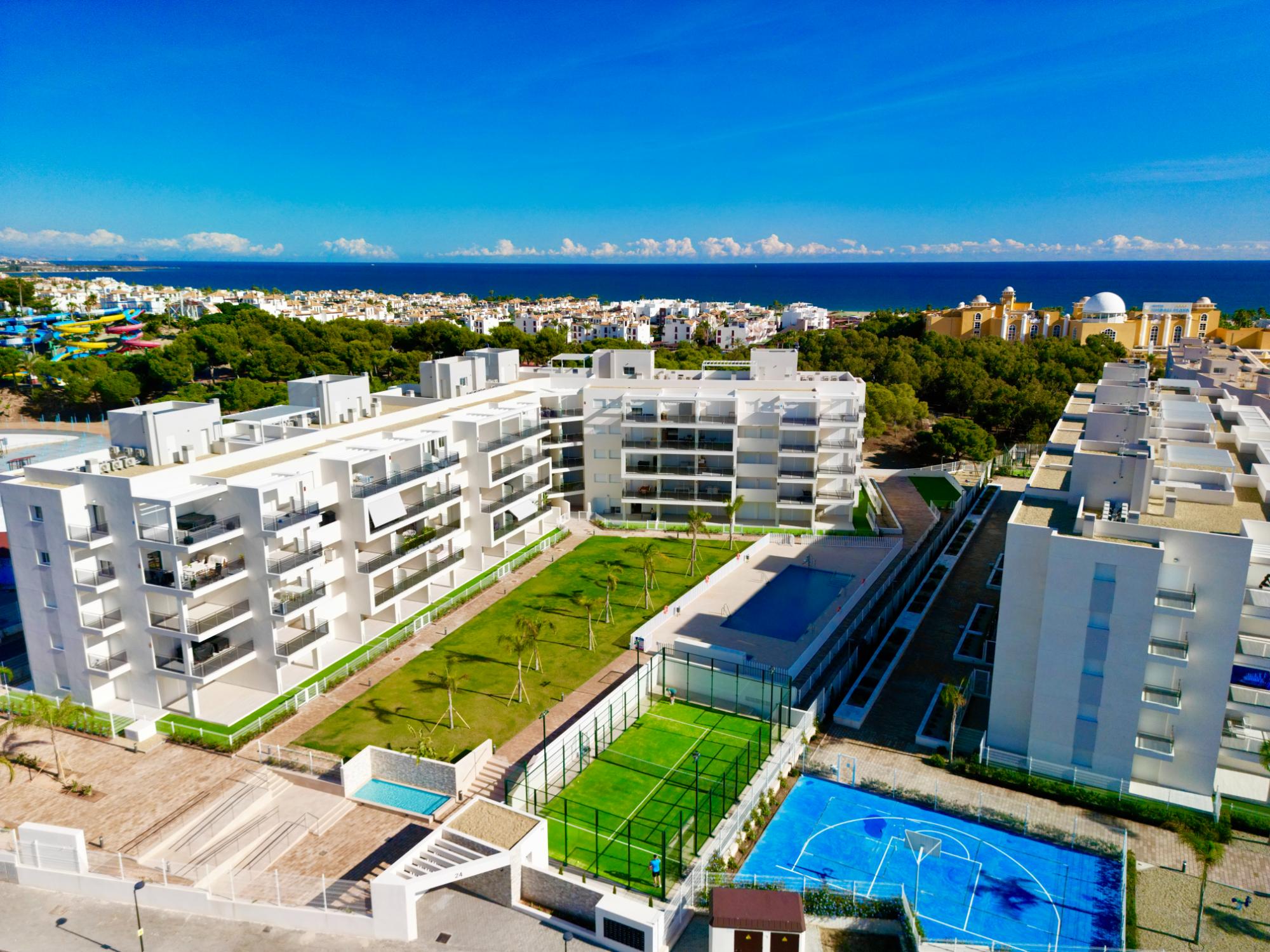
The common areas at Cantal Homes have been designed taking into account the significant HOA fees they can generate. So, we have tried to balance a variety of top-quality facilities with solutions that reduce maintenance costs.
OUTDOOR COMMON AREAS
Plus Cantal Homes has green areas with plants that don’t need a lot of water and local species with a drip-watering system.
The shared facilities will include the following:
• Pool for adults and children with natural grass (with solarium for sunbathing).
CARPARKS
The door into the carpark will be automatic and remote operated.
The flooring inside the carpark will be polished concrete quartz and stamped concrete for exterior areas and ramps.
Installation of fireproofing according to current legislation.
LIFTS
Lifts will be installed with automatic doors, load sensors, and phone connections.
Energy-efficiency characteristics:
• Stand-by mode
• Energy-efficient inside lighting.
• Tractor unit with variable speed, power, and frequency.